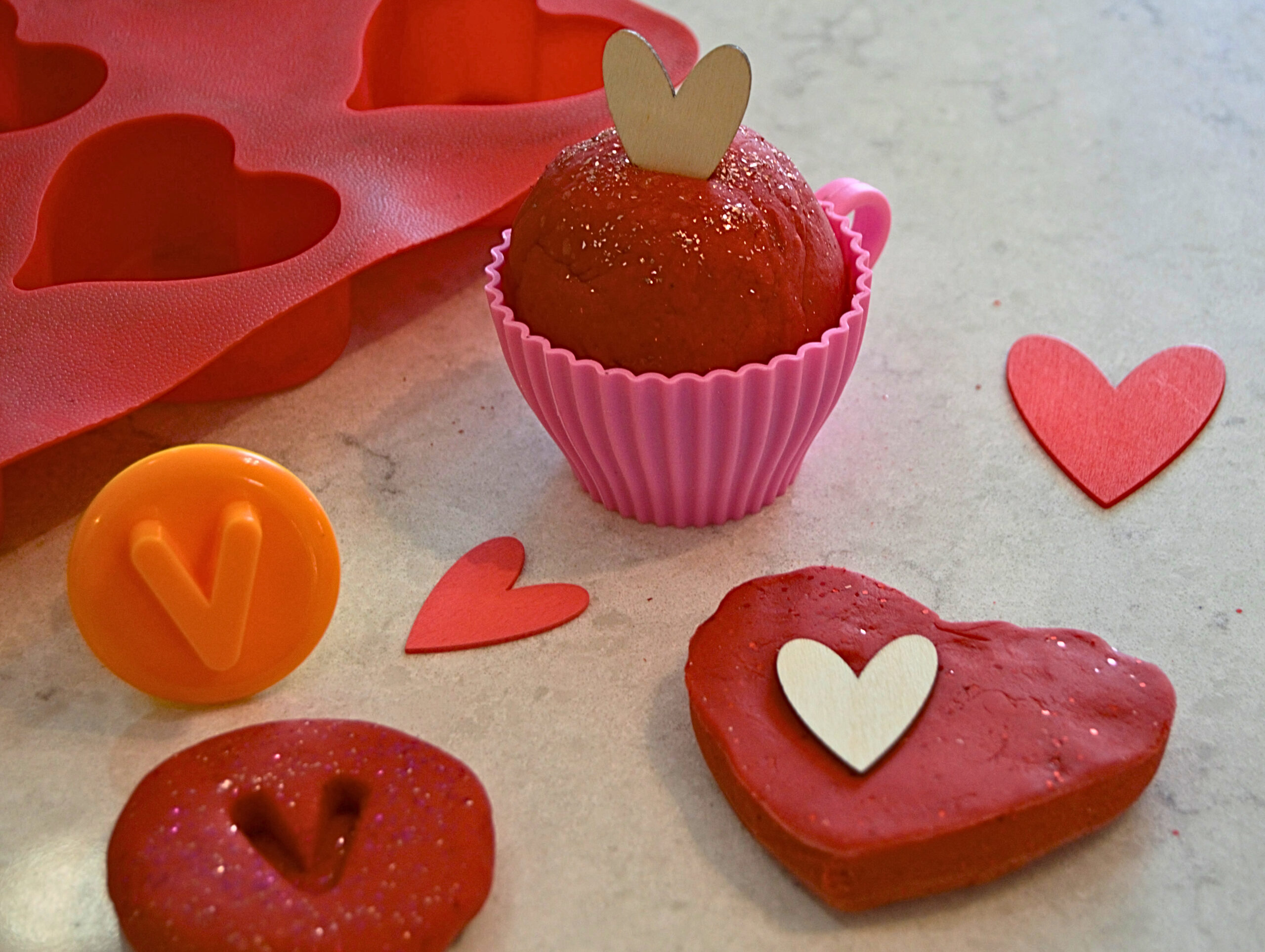

Children absolutely LOVE playing in sensory bins. Making your own DIY Valentine’s Day sensory bin at home is a simple but effective way to engage your little one and give you a chance to drink your coffee while it is still warm!
Sensory Bins- More than Just Play

Sensory bins are a great way to provide children with an opportunity for creative exploration, allowing them to learn through tactile experiences that engage their senses. They provide excellent opportunities to build important fine motor skills. Pairing them with learning activities such as counting or letter identification is another great use.
Creating your own Valentine’s Day sensory bin for your little one is easy! First you need to color the rice. To do this you will need some basic ingredients usually found around the house:
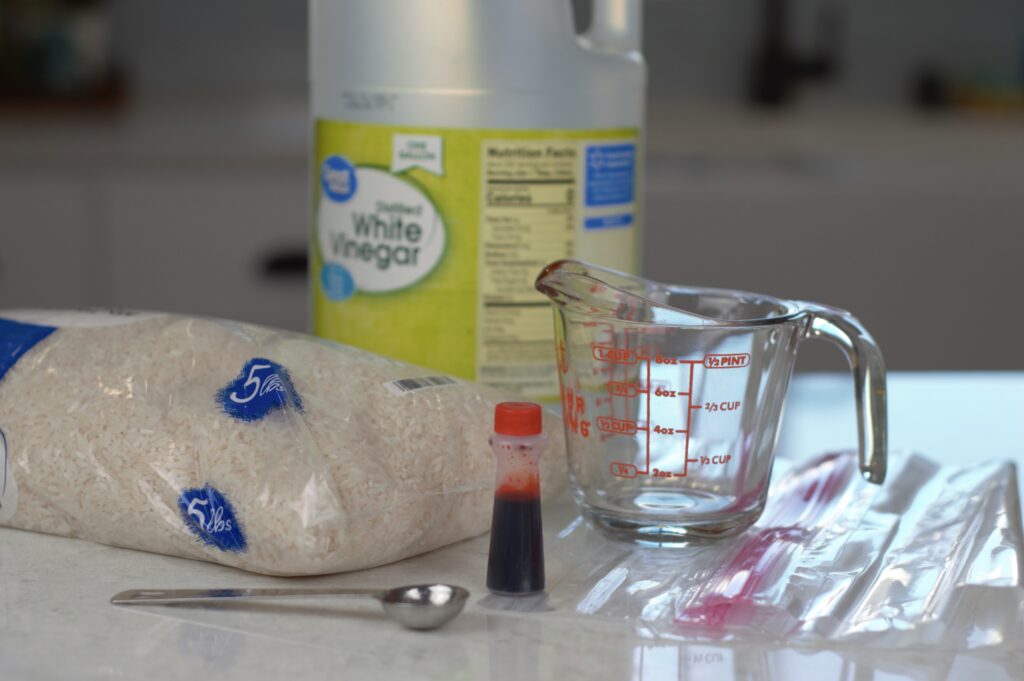
-Large bag of inexpensive uncooked white rice. 5-10 pounds depending on the size of the bin you intend to use.
-red food coloring
-White Vinegar
-Plastic ziploc bag
-1 c measuring cup
-1 teaspoon measuring spoon
-large tray to put your rice on to dry
-container to use for your bin
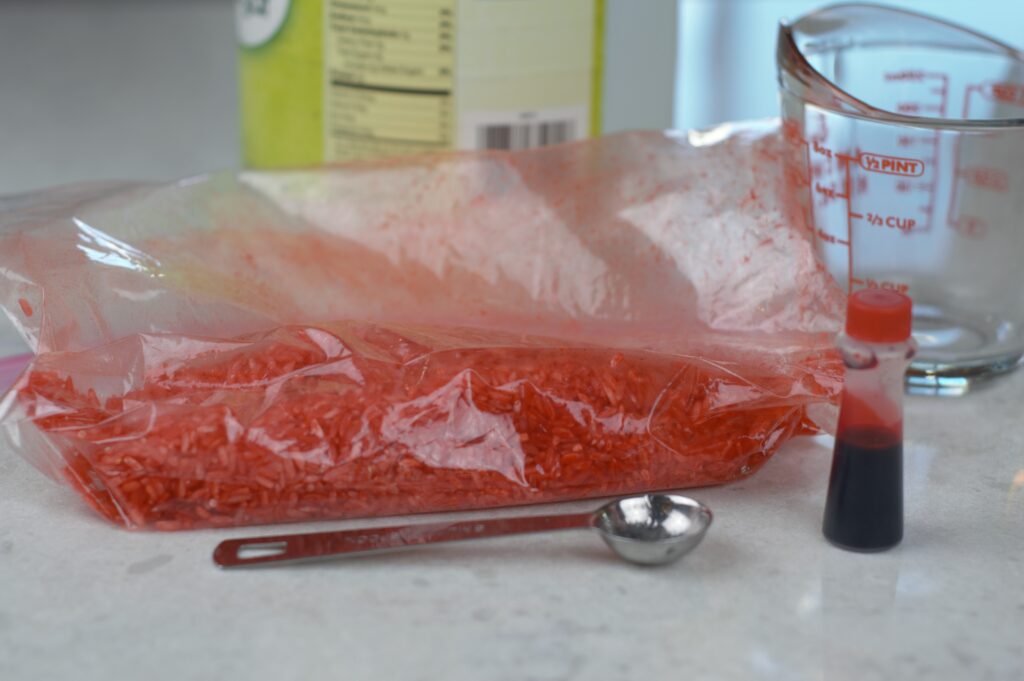
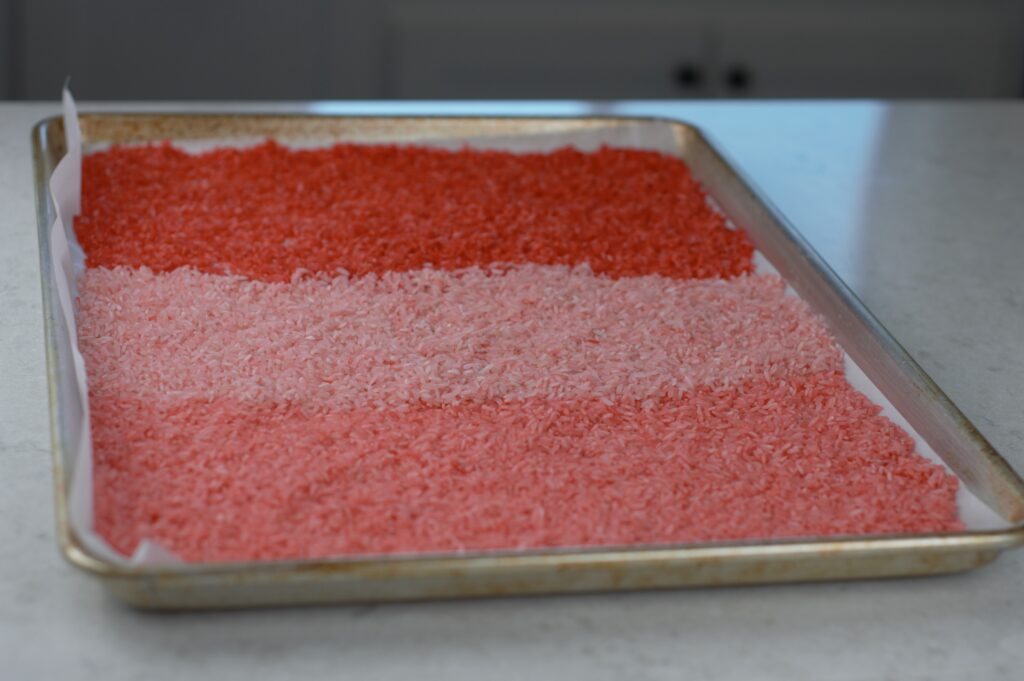
To color the rice, put 1 cup of uncooked rice into the baggie with 1 tsp of vinegar. If you want dark red rice add in 15 drops of red food coloring. Seal the bag and begin massaging the food coloring and vinegar throughout the rice until you get a nice dark red color throughout. Then dump the red rice out onto a large sheet pan. Spread it thinly across the pan and let it dry overnight. Continue doing this until you have enough colored rice to fill your sensory bin. To make a medium pink I put in 5 drops of red food coloring into the bag with 1 c of rice. To make a light pink I put only 2 drops into the bag. You can experiment with yours to achieve your desired colors.
What to Use for the Bin
Over the years, I have used a wide variety of containers to hold the sensory bin materials for my own children as well as for the children in my classroom. I have tried plastic storage bins, sensory tables from IKEA, fancy Ecr4kids sensory tables and even just a simple cardboard box. Honestly, children don’t care what you use as the container, they just enjoy playing with what’s in it!

Adding Tools and other Fun Items
It’s important to encourage play and provide opportunities to build motor skills by adding in simple tools from around the house. Some items that work well are measuring cups and spoons, silicone cupcake holders, funnels, scoops, etc. Children love repeatedly scooping and pouring the rice. For this Valentine’s Day themed bin, I incorporated small wooden hearts purchased from the Dollar Tree. These are great to use to encourage counting as they play.
Add in Learning Activities

I added this heart themed uppercase lowercase letter matching activity to the Valentine’s Day sensory bin. Children love sifting through the rice to find the other half of the heart with the matching letter on it. If you are interested in using this learning activity with your little one you can find it in here in my Etsy Shop.
Don’t Stress the Mess
Yes, sensory bins can be messy, but I have some tips for managing the mess and keeping your stress level under control. First off, if the weather is nice, take it outside! This is the simplest and most stress-free way to mitigate the mess. Yes, you may have some pink rice in your grass, but I find it always disappears by the next day (bird food perhaps?). If you are going to be using your sensory bin inside, lay down a large plastic tablecloth from the dollar tree, or an old flat bed sheet and then you can easily clean up whatever escapes the bin during play. I have even brought a small plastic kiddie pool inside and placed the bin inside that and that worked great at containing the mess. Finally, get the children involved in the cleanup! I purchased several small handheld brush and dustpan sets, and the kids absolutely love sweeping up any rice that escaped the bin! Just remember, the benefits of sensory play far outweigh the mess that it may make in the process.